Image to Image AI · Independent product video test
Veo 3.1 vs Kling 3.0
Kling 3.0 completed both product actions in these samples. Veo 3.1 Fast returned sooner and cost $0.15 per clip versus $0.28, and retained the coffee machine’s body best; it did not complete the pour. This test covers the Fast variant, not every Veo tier.
Tested 2026-10-23 via KIE
Which sample fits your product brief?
Inspect Veo Fast for cost and shape
The machine’s body stayed closest to the reference at a lower provider charge in this run. The square input was cropped and no coffee poured, so use this sample to judge those tradeoffs before trying your own prompt.
Inspect Kling for visible action
Kling showed the lid opening and the espresso pour while retaining the machine. It pushed in rather than orbiting in the coffee sample, and took longer than Veo Fast in both recorded requests.
Settings, cost and waiting time
KIE dollars below are historical provider charges per clip, not retail prices on Image to Image AI. Site credits are calculated from current configuration for the tested settings. Generation uses the existing credit flow; viewing these results is public. Exact request settings, including Kling’s std mode, are in the CSV.
| Model / tested tier | KIE cost per clip | Current site credits per clip | Wait P1 / P2 | Original output P1 / P2 | Original audio |
|---|---|---|---|---|---|
| Veo 3.1 Fast720p · 4s | $0.1530 KIE credits | 160 credits | 63s / 74s | 1280×720 1280×720 | Yes |
| Kling 3.0720p · 4s | $0.2856 KIE credits | 187 credits | 79s / 94s | 1280×720 960×960 | No |
All web previews are compressed and silent. In the wider four-model test, original audio: Veo and MiniMax had sound; Kling used sound=false and Seedance used generate_audio=false. MiniMax’s request had no audio parameter. No audio quality comparison was performed.
P1 · Text to video: opening earbuds case
Same text prompt · 16:9 requested · 4 seconds · each model’s tested tier below
Look for the lid opening on camera, the slow push-in, water droplets and any unrequested objects.
Exact prompt
Premium product commercial: a matte black wireless earbuds case slowly opens on a wet slate surface, morning sunlight through light mist, water droplets on the case, slow cinematic push-in, shallow depth of field. No text, no logos.
Veo 3.1 Fast
720p · 63sKling 3.0
720p · 79sWeb previews are compressed for delivery and preserve the original aspect ratio. The table reports original output dimensions, not preview dimensions. Compare action and shape here; these previews cannot establish a fine-detail ranking.
P2 · Image to video: pour the espresso
Same square first frame and text prompt · 4 seconds · output shapes differ by model
Look for the cup sliding in, visible coffee flow, camera motion and retention of the machine’s body and handle.
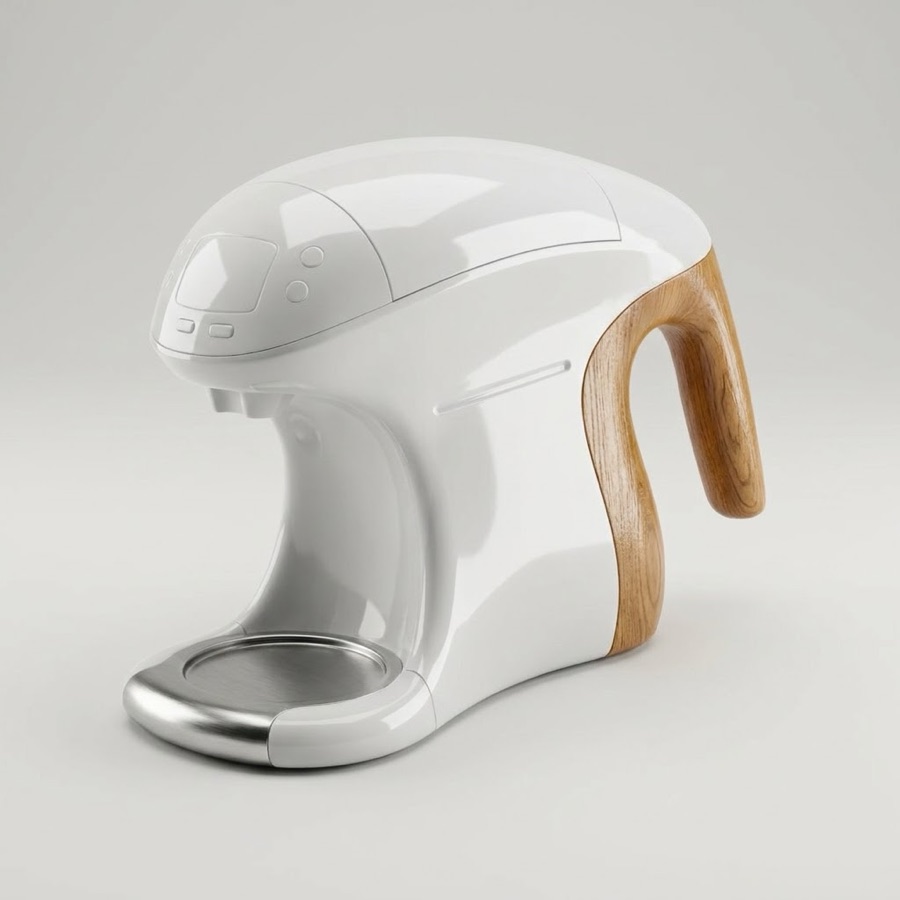
Exact prompt
The camera slowly orbits the coffee machine; a white ceramic cup slides under the spout and a thin stream of espresso pours, steam rising, soft studio lighting. Keep the machine shape, glossy white finish and wooden handle unchanged.
Veo 3.1 Fast
720p · 74sKling 3.0
720p · 94sWeb previews are compressed for delivery and preserve the original aspect ratio. The table reports original output dimensions, not preview dimensions. Compare action and shape here; these previews cannot establish a fine-detail ranking.
What this test can tell you
Image to Image AI ran the same product prompts once on each model using the lowest tested tier. Timing runs from submission until success was detected by polling every 15 seconds; it is not a latency guarantee. Observations are editorial readings of sampled frames, without blinded review or repeated trials.
There is no resolution-matched comparison, long-duration test or systematic audio test here. A different prompt, seed, input, tier or retry can produce a different result. KIE costs were checked against balance differences in the test record; the CSV provides the public measurements and settings.
Sources and configuration
Measured on 2026-10-23: local KIE request ledger, downloaded outputs and frame observations. The public CSV records those measurements. Current site credit figures come from the existing model estimators; historical provider dollar charges use the test record, checked against KIE pricing on that date.
The previews are KIE outputs, transcoded and compressed with audio removed. The shared P2 first frame was an image previously generated on Image to Image AI.
Image to Image AI is independent and is not affiliated with or endorsed by Google, Kling, ByteDance or MiniMax. Model names identify the tested services. Upload only images and other material you have the right to use. Read the terms
Questions about this comparison
Is this a fair benchmark of overall model quality?
No. Both tested tiers are 720p, but there is only one sample per cell and the observations were not blinded. The P2 output shapes also differ: Veo is widescreen and Kling is square. Use these clips to inspect the tasks, not to predict every generation.
Are the KIE dollar costs the price I pay here?
No. They are the historical provider charges for these test clips. Image to Image AI uses site credits; the table shows current configured credits for the tested settings.
Can I watch the samples without an account?
Yes. The samples, reference image and CSV are public. Creating your own video follows the existing account and credit requirements.
Is Veo 3.1 cheaper than Kling 3.0?
Yes, for the tested Fast configuration only: the recorded KIE charge was $0.15 versus $0.28 per clip. Other tiers, durations and audio settings were not compared for price here.
Did Veo preserve the reference and complete the pour?
No. It retained the machine’s body best in the frame observations, but cropped the square reference to widescreen and did not pour coffee within this sample.